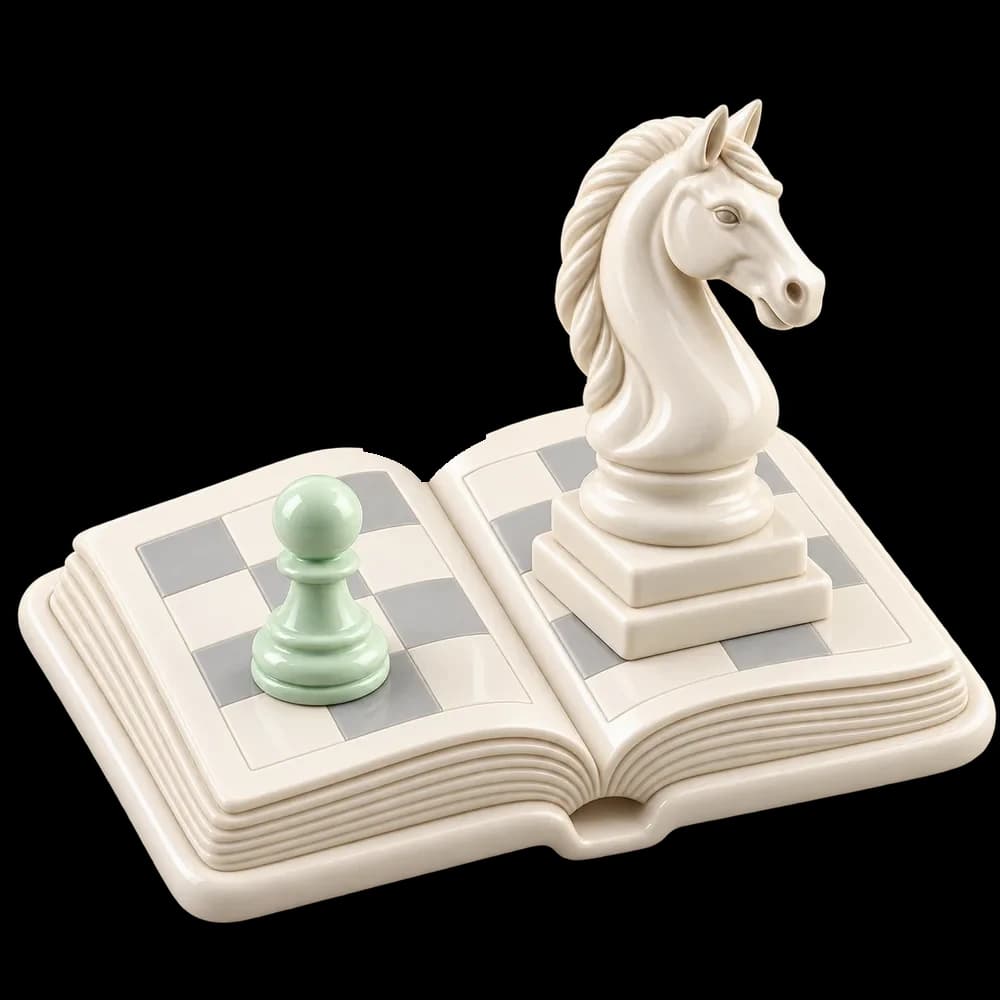
Chess rules
for beginners
Learn how to play chess step by step. Master piece movements, castling, en passant, checkmate, stalemate, and how chess clocks work.
100% free rules guide · Zero paywalls · FIDE standard laws
How each chess piece moves
Pawn Movement
Moves forward 1 square (or 2 on its first move). Captures 1 square diagonally forward. Promotes upon reaching the 8th rank.
Knight Movement
Moves in an 'L-shape' (2 squares in one direction, then 1 square perpendicular). The only piece that can jump over others.
Bishop Movement
Moves any number of vacant squares diagonally. Always stays on squares of its starting color (light-square or dark-square).
Rook Movement
Moves any number of vacant squares horizontally or vertically along ranks and files. Powerful in open files and endgames.
Queen Movement
Combines the power of a rook and bishop. Moves any number of vacant squares horizontally, vertically, or diagonally.
King Movement
Moves exactly 1 square in any direction. The most vital piece: must never move into check. Checkmate ends the match.
How to castle in chess & en passant explained simply
How to Castle in Chess
Castling is the only move where you move two pieces in a single turn. The king moves two squares toward a rook, and that rook hops over the king to the adjacent square.
- Neither the king nor the castling rook has moved yet.
- All squares between the king and rook are empty.
- The king is not currently in check, and does not cross or land on attacked squares.
En Passant Explained Simply
When an enemy pawn moves two squares forward from its starting rank and lands directly beside your pawn on the 5th rank (4th for Black), you can capture it diagonally behind it as if it had only moved one square.
- Applies strictly to pawns on the adjacent file.
- Must be played on the immediate next turn, or the right is forfeited.
- Prevents pawns from bypassing enemy control squares untouched.
How checkmate, stalemate & draws work in chess
How Checkmate Works
Checkmate happens when a king is placed in check (under attack) and has no legal escape: it cannot move away, cannot block the checking line, and cannot capture the attacker. The game ends instantly in victory.
How Stalemate Works
Stalemate occurs when the player whose turn it is is NOT in check, but has zero legal moves anywhere on the board. Stalemate is a draw. Be careful not to accidentally stalemate an opponent when up material!
What is a Draw in Chess
Draws also occur via threefold repetition (same position occurs 3 times), the 50-move rule (50 moves without a capture or pawn push), mutual agreement, or insufficient mating material (e.g. King vs King).
How chess clocks & time controls work
Chess Time Controls Explained
Each player has an individual clock that counts down only when it is their turn to move. In Web3Chess, choose from standard FIDE paces:
- 1+0 Bullet: 1 minute total per player. Lightning pace.
- 3+2 Blitz: 3 minutes + 2 seconds added per move. Standard competitive format.
- 5+0 Blitz: 5 minutes flat. High tactical intensity.
- 10+0 Rapid: 10 minutes total. Strategic room for calculation.
What Happens When Clock Runs Out
When your timer hits 0:00, you are "flagged". The match result depends on the remaining board material:
- Opponent has mating material: You lose the game on time.
- Opponent has insufficient material: The game is declared a Draw (FIDE 6.9).
Frequently asked chess rules questions
How does checkmate work in chess?
Checkmate occurs when a player's king is under direct attack (in check) and there are no legal moves to escape. Escape options are: moving the king to an unattacked square, capturing the attacking piece, or blocking the attack with another piece. If none are possible, it is checkmate and the game immediately ends in victory.
How does stalemate work in chess?
Stalemate occurs when the player whose turn it is to move is NOT in check, but has zero legal moves remaining anywhere on the board. Stalemate immediately ends the game in a draw (half a point for each player), regardless of how many pieces the opponent still has.
How do you castle in chess?
Castling is a special move where the king moves two squares toward a rook, and the rook hops over to the square the king skipped. Requirements: neither piece has moved yet, all squares between them are empty, the king is not in check, and the king does not pass through or land on an attacked square.
How does en passant work in chess?
En passant ('in passing') allows a pawn to capture an enemy pawn that moves forward two squares from its starting square, landing adjacent to yours. You capture it diagonally as if it had only moved forward one square. The capture must be made on the very next turn, or the right to capture en passant is permanently lost.
What happens when a chess clock runs out?
When a player's clock reaches 0:00 (called 'flagging'), they lose the match on time—provided the opponent has sufficient material to deliver checkmate. If the opponent has insufficient material (such as a bare king or king and knight), the game ends in a draw according to FIDE Article 6.9.
Ready to test your chess rules knowledge?
Solve interactive tactical puzzles in the Academy or play unlimited free practice games with Free Coach in Telegram.